How to Make a Short Bike Ride Easier to Repeat
Build a small cycling habit around an existing commitment, a simple route, and preparations that make leaving feel easy.
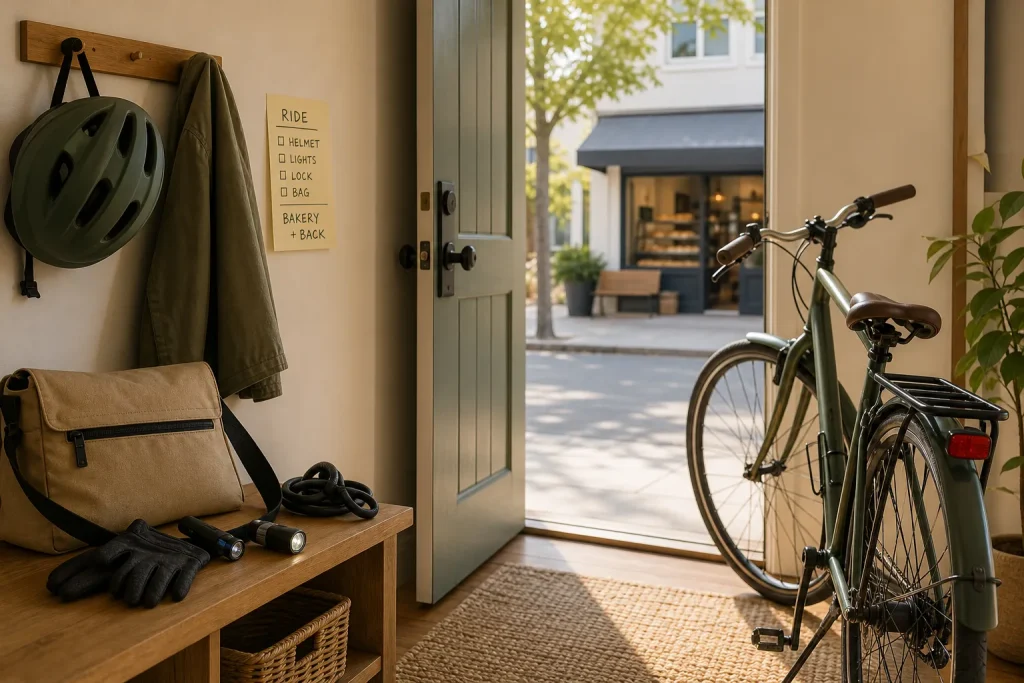
A bike beside the door can turn a bakery stop, a visit to the library, or a loop around the block into a ride that fits an ordinary day. The trick is to make starting feel familiar: connect the outing to a routine you already have, prepare a few essentials, and decide what counts as enough.
Connect the ride to a routine you already keep
Choose an existing commitment as the cue for a ride: picking up bread, visiting a nearby park, or going to a regular appointment. The cue helps the ride come to mind without requiring you to invent a new reason every time.
Keep the first version modest. If riding to work involves too many moving parts, try cycling to a familiar stop on a day with fewer obligations. For a time-sensitive errand, leave room to lock the bike and walk inside. The point is to make the ride easy to fit, not to race the clock.
Define a small finish line for each outing
Before setting out, name a simple endpoint: reach the corner shop and return, complete one loop, or ride until a particular park entrance. A clear finish line helps you fit the outing into the day and gives you permission to stop without turning a short ride into a workout.
Choose a pace that lets you stay relaxed and attentive. Stop somewhere that does not block other people. If you are returning after a long break, finish while the ride still feels manageable; leaving yourself with a pleasant memory can make it easier to start again.
Make the start-up routine repeatable
Keep the gear you use together. Put your helmet near the bike, store lights where you can reach them, and keep your lock and preferred gloves in one regular spot. If you carry a bag, leave it ready with the everyday items you tend to take.
When you know a ride is likely the next day, set out suitable clothing in the evening. Check the forecast and choose an adjustable layer and footwear that works with your pedals. A small setup you can repeat is more useful than elaborate preparation that has to be rebuilt for every outing.
Use a simple fallback for days that change
Work can run late, a household task can take longer than expected, or rain can arrive just before you leave. Instead of treating a missed outing as a broken streak, decide what an easy alternative would look like: ride home from an errand you are already making, or move the outing to another open spot in your day.
Keep the fallback about timing and effort, not an elaborate new plan. If conditions feel unsuitable, skip the ride and resume when it fits. A habit should support daily life rather than demand that every planned outing happen.
Notice one detail that would improve the next ride
After returning, identify one specific thing to keep or adjust. Maybe the bag strap slipped, or you left your gloves by the door. Make one practical change, such as tightening the strap or putting the gloves beside the helmet. Avoid turning every ride into a scorecard; the purpose is to make the next start more comfortable, not to judge your performance.
If recurring discomfort or a bike problem makes riding unpleasant, pause and address it rather than pushing through. A qualified bike mechanic can help with mechanical concerns, and a health professional can advise you about persistent pain or other health questions.
Fit the routine to the week you actually have
Choose a frequency that fits your real calendar, not the week you wish you had. Attach a regular ride to a day when you usually have a little room, and leave any extra outing optional. If the week gets crowded, keep the smallest version that still feels worthwhile, or resume when time opens up.
A paper calendar or gentle reminder can prompt a decision, but it should not create guilt. If plans change, move the ride or let it go. The routine is useful when it fits around daily life.
Check the practical details before you head out
- Check whether the bike is available and ready to ride; if it is, keep the planned outing, but if it is not, postpone until the issue is addressed or choose another way to make the errand.
- Check that your helmet fits comfortably and the lights are within reach; if both are ready, continue preparing, but if either is missing or unusable, find a suitable replacement before riding.
- Check the day’s schedule for a natural opening; if there is enough room for the ride and its purpose, set out, but if time is tight, choose a shorter endpoint or move the outing.
- Check the weather and your clothing; if you feel prepared for the conditions, proceed, but if you do not, change layers or skip the ride.
- Check that the bag sits securely and does not interfere with riding; if it stays in place, take it, but if it shifts or gets in the way, adjust it or leave nonessential items behind.
- Check whether you can name a comfortable endpoint; if you can, use it as the finish line, but if you cannot, choose a simple destination or loop before leaving.
A hypothetical Saturday ride, worked through
Imagine a rider who already walks to a neighborhood bakery on Saturday mornings, owns a city bike, and has set aside a free half-hour. Those details are hypothetical. First, the rider chooses the bakery as the outing’s purpose and names “lock the bike outside and collect bread” as the finish line. Next, they set out a helmet, lock, lights, and a small bag the night before. In the morning, they check that the bike is ready, the weather suits their clothing, and the bag stays secure. If those checks are satisfactory, they ride to the bakery and return; if a check raises a concern, they postpone the ride and walk as usual. The expected result is a familiar errand with less last-minute preparation. The tradeoff is that cycling depends on the rider’s available time and the bike’s readiness that morning.
Make the next ride easy to begin, not impressive to describe. Leave one small cue where you will see it—your helmet beside the door or a note on the calendar—and let that cue prompt a simple choice when the day arrives.
More useful reads
What to Carry on a Bike When You Have Errands to Run
Plan an errand load around the bike, the purchases, and the stops. Learn where to put…
The Simple Bicycle Checks Worth Learning
Choose between a quick pre-ride scan, a focused observation, or a mechanic’s inspection—and learn when a…