The Simple Bicycle Checks Worth Learning
Choose between a quick pre-ride scan, a focused observation, or a mechanic’s inspection—and learn when a stationary check is not enough to judge a bike’s condition.
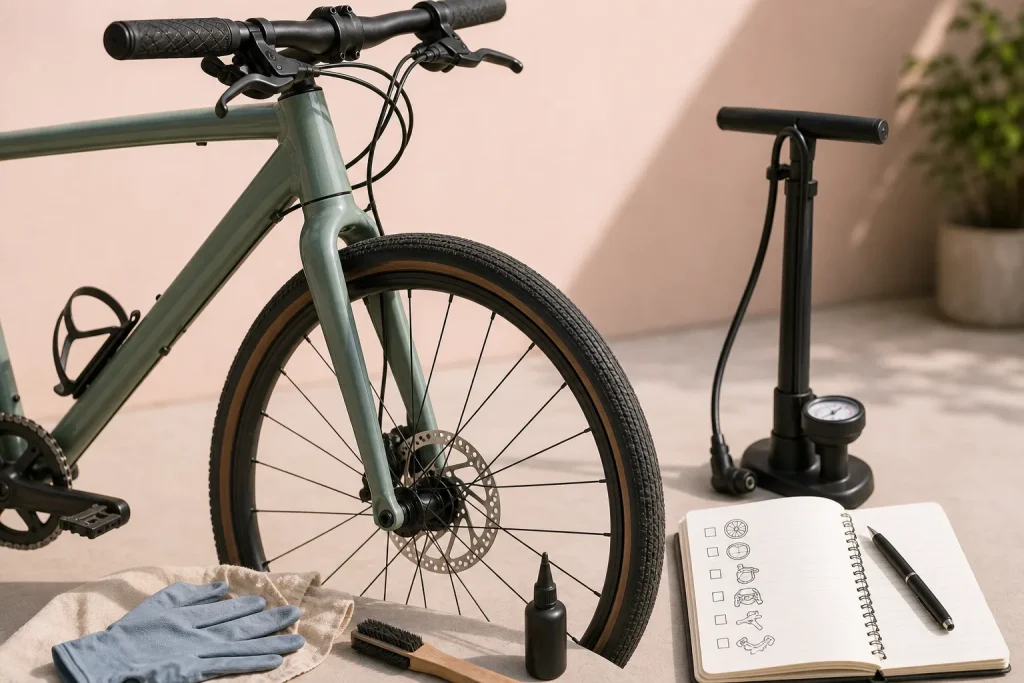
A front brake lever that suddenly pulls closer to the handlebar is a reason to pause before a ride. A brief look and gentle stationary checks can reveal some visible changes, but they cannot certify a bicycle as safe or rule out hidden faults. Use them to decide whether to stop and seek help, not as permission to ride.
There are three useful approaches: a quick visual scan, a focused observation when one symptom stands out, and an assessment by a qualified bicycle mechanic. The choice depends on what you notice, whether a safety-critical part may be involved, and how uncertain you are. Component designs and correct procedures vary, so follow the bicycle and component makers’ instructions; do not improvise adjustments.
Use a quick scan to spot visible changes
Park the bicycle on a level surface and keep it stable. Look from front to back without taking parts apart. This is an observation, not a full inspection, and passing it does not establish that the bicycle is safe to ride.
- Tires: Look for a cut, bulge, exposed casing, embedded glass, or a tire that appears unusually soft. If you see damage or are unsure whether it is serious, keep the bicycle parked and ask a qualified mechanic; if none is visible, continue the scan without treating that as proof of sound condition.
- Wheels: Look for a wheel sitting visibly out of place, rubbing, a cracked rim, or a loose-looking spoke. If you see a crack, marked wobble, or apparent looseness, do not ride and arrange a mechanic’s assessment; if you see none, continue checking rather than assuming the wheel is secure.
- Brakes: With the bicycle stationary, squeeze each lever separately and look for obvious damage or contamination around the braking parts. If a lever pulls unusually close to the handlebar, a part appears damaged, or you cannot tell whether the brake works correctly, keep the bicycle parked and consult a mechanic; if nothing stands out, remember that this check cannot verify braking performance in every condition.
- Steering and controls: Look for visible damage or parts that appear out of position. Do not force a twist or try to tighten unfamiliar fittings. If the handlebar or stem seems loose or damaged, do not ride and seek qualified help; if it appears normal, that is only a visual observation.
- Wheel retention: Check the bicycle manual to identify whether your bike uses a quick-release, thru-axle, or another retention system. If you do not recognize the system or cannot tell whether it is correctly secured, leave it parked and ask a mechanic; if it looks as the manual describes, do not treat appearance alone as a complete check.
- New noises or changes: Note whether a sound occurs during braking, pedaling, turning, or rolling. If it could involve braking, steering, or a wheel, stop and have the source assessed; if it seems minor but remains unexplained, record when it occurs and ask a mechanic rather than riding to investigate.
A floor pump with a gauge can help you compare tire pressure with the range printed on the tire sidewall and the maker’s guidance. A hand squeeze alone is not a reliable way to set pressure. If the tire appears damaged or the correct pressure guidance is unclear, ask a bicycle shop instead of guessing.
Keep hands, grease, and chain lubricant away from brake pads and rotors. A rotor may be hot after a ride. Do not touch it until it has cooled.
Limit focused checks to observation
A focused check can help you describe a specific change, such as a new rub, a chain that catches, or a lever that feels different. Keep it to actions you understand and can perform safely while the bicycle is stationary. A successful stationary check cannot certify the bicycle, reveal every fault, or replace the procedure specified for its components.
For a brake concern, look for obvious damage or contamination and note how the lever feels without dismantling the brake or changing its adjustment. If the brake seems weak, the lever behaves differently, or you are unsure whether a part is damaged, do not ride until a qualified mechanic has assessed it. Do not attempt to diagnose brake performance with a road test.
For a chain or shifting concern, do not pedal if the chain is jammed or appears caught. If the bicycle is already stable and you can turn the pedals gently without force, observe whether the chain catches or drops; stop at once if it binds. Do not straighten a visibly bent derailleur or reach near moving parts. If the cause is unclear, have a mechanic inspect it.
For a wheel concern, look for visible rubbing, a crack, a bulge in the tire, or a wheel that appears out of line. Do not adjust spokes or wheel bearings unless you have the instructions and skills for that exact component. If you notice damage, marked movement, or uncertainty about the wheel’s attachment, keep the bicycle out of use and seek qualified help.
For a new sound, write down when it occurs and which area seems involved. Sounds can travel through a frame, so the apparent source may be misleading. If the noise could affect braking, steering, or wheel retention, do not ride to gather more clues; describe it to a mechanic instead.
Stop and seek qualified help when risk or doubt is high
Do not ride if a brake appears unable to hold, a wheel seems loose in its mount, a tire has a serious cut or bulge, a frame or fork appears cracked, or the handlebar or stem moves. These observations do not diagnose the cause, but they are reasons to leave the bicycle parked and ask a qualified bicycle mechanic to assess it. If there has been a hard impact, visible damage, or a change in how the bicycle handles, do not use a short ride to decide whether it is safe.
When contacting a shop, describe what changed and when it happens. Mention any recent impact, component changes, or work already attempted. If a sound can be recorded while the bicycle is stationary, a short recording may help explain it; do not film while riding. Ask the mechanic to explain what needs attention and which symptoms mean the bicycle should remain parked.
Brake and wheel procedures depend on the particular components and retention system. If you are unsure how a check should be performed, or the issue concerns braking, steering, a structural part, or wheel attachment, have a qualified mechanic verify it. A visual scan or a successful stationary check is not a substitute for that assessment.
Choose the check that matches the uncertainty
Use a quick scan to notice visible changes before a routine ride, not to certify the bicycle. Use a focused observation when a particular symptom appears and you can inspect it without dismantling or adjusting a safety-critical part. Choose a mechanic when braking, steering, structural integrity, or wheel security may be involved, after a hard impact, or whenever the result is unclear.
Let the possible consequence guide the decision. If a sound might come from a brake or loose wheel and you cannot tell which, uncertainty itself is a reason to stop and ask for help. Do not keep riding to collect more information if a fault could affect stopping, steering, or keeping a wheel attached.
A short note on your phone can make a shop conversation more useful. Record the symptom, when it occurs, and what you observed while the bicycle was stationary. Keep the note factual; it is not a diagnosis and does not establish that the bicycle is safe.
A hypothetical brake concern calls for a clear decision
Imagine a rider preparing a commuter bicycle for a trip. The front brake lever feels softer than it did before. The rider has a basic multitool, no repair stand, and no experience adjusting brakes. These are invented details for the example; the starting point is a changed feel in a safety-critical control.
The rider parks the bicycle, keeps it off the road, and squeezes the lever while stationary. It travels unusually close to the handlebar. The rider does not loosen a bolt, tighten a cable, or attempt a test ride. Instead, they contact a qualified mechanic and report the changed lever feel and the stationary observation.
The decision is to leave the bicycle parked until it has been assessed. The rider cannot know from that check whether the cause is adjustment, wear, damage, or something else. The tradeoff is delaying the trip or choosing another way to travel rather than relying on an observation that cannot verify the brake.
Build a routine without turning checks into repairs
Keep the bicycle manual accessible, along with a floor pump and a clean rag. Use the manual for maker-specific instructions, including the correct wheel-retention procedure and tire-pressure guidance. Keep an oily rag away from brake parts. If you do not understand an instruction or cannot identify a component, ask a bicycle shop to explain it.
Learn unfamiliar maintenance tasks with guidance for your exact bicycle and components. Do not assume a neighbor’s method or a general video applies to your setup. A careful observation can help you notice a change and communicate it clearly, but it cannot rule out every fault. When braking, steering, structural integrity, or wheel security is in question, leave the bicycle parked until a qualified mechanic has assessed it.
More useful reads

How to Make a Short Bike Ride Easier to Repeat
Build a small cycling habit around an existing commitment, a simple route, and preparations that make…
What to Carry on a Bike When You Have Errands to Run
Plan an errand load around the bike, the purchases, and the stops. Learn where to put…